
Tolerance in Islam
Category : Ahmadiyya
The Holy Qur’an clearly stresses the importance of religious freedom. There is no compulsion in the matters of religion. Faith is an individual concern and commitment, between you and the One God.
“There should be no compulsion in religion. Surely, the right way has become distinct from error.”
(Holy Qur’an, Chapter 2, Verse 257)
It must therefore be something which you desire, not what is forced upon you. If you force a faith upon someone, then it becomes hollow and without true conviction. Islam stresses on a person finding the truth through their own path. If a faith is true, then it will appeal to the heart.
This is why the verse states:
‘Surely, the right way has become distinct from error’.
Islam stresses that we must not force or compel another to believe.
Elsewhere, in Chapter 10, Verse 100 of the Qur’an, we read:
“And if your Lord had enforced His will, surely, all who are on the earth would have believed together.
Will you, then, force men to become believers?”
This verse shows that religious freedom is part of Allah’s design. Allah hasn’t forced anyone, so who are we to do so? By forcing your faith upon someone, is really having no faith at all. This is not the idea behind Allah creating this physical world. As the verse states, it could have been easy for Allah to force His Will, but Allah gave us free will instead; gave us choices. We must choose the right path or be answerable for the consequences. Through all the Holy Books, Allah has explained to us the result of this choice. Either you submit to the One God and attain Paradise or you reject Him and attain Hell. But that has to be our choice. Likewise, the path we take, must be our choice.
In fact there is an entire chapter of the Qur’an, Sura Al-Kafirun (109), which clearly explains how with should conduct ourselves with non-believers:
“In the name of Allah, the Most Gracious, ever Merciful,
Say, O ye disbelievers, I worship not as you worship,
Nor do you worship as I worship
Nor do I worship those that you worship
Nor do you worship Him Whom I worship,
For you your religion and for me my religion.”
A very beautiful chapter which explains clearly that you are free to choose which ever path you desire, so you should neither force a Muslim to worship what you worship; likewise a Muslim should not force his beliefs upon you. “For you your religion, for me my religion.” A clear statement of religious tolerance in Islam.
Any examples of this tolerance?
The best example must be the example of our beloved Prophet (s.a.w. – may peace and blessing of Allah be upon him), he understood the Qur’anic teachings better than anyone else and his is the example that every Muslim should always follow. The Holy Prophet Muhammad (s.a.w.) actively promoted peace, tolerance and compassion for all non-Muslim minorities. He did not simply demand religious tolerance of his followers; but he laid down the foundations to provide legal and constitutional protections for religious minorities.
When the Holy Prophet (s.a.w.) settled in Medina, he set about creating the first Islamic state. In Medina were not only Muslims, but there was three Jewish tribes and other Arabs who had not accepted Islam. The Holy Prophet (s.a.w.) was asked to govern all the citizens. To achieve this he made a formal agreement, known as the Charter of Medina in 622 A.D.
We should also bear in mind that this Charter of Medina pre-dated the English Magna Carta by almost six centuries. A formal agreement between Prophet Muhammad (s.a.w) and all of the significant tribes and families of Medina, including Muslims, Jews and non-Muslim Arabs.
• Remarkably 45% of the total population in Medina consisted of non-Muslim Arabs,
• 40% consisted of Jews,
• and only 15% consisted of Muslims.
The Charter consists of 47 clauses which set forth the formation of a sovereign nation-state with a common citizenship for all communities. The Charter protects fundamental human rights for all citizens, including equality, cooperation, freedom of conscience and freedom of religion. Clause 25 specifically states that Jews and non-Muslim Arabs are entitled to practice their own faith without any restrictions. In short, this was the first document in history to establish religious freedom as a fundamental constitutional right.
The Holy Prophet Muhammad (s.a.w) sent letters to various kings surrounding Arabia declaring his intention for peace and cooperation. One such letter was written to the monks of St. Catherine’s Monastery of Mount Sinai in 628 A.D. and known today as the “Charter of Privileges.”
The letter reads:
“This is a message from Muhammad, son of Abdullah, as a covenant to those who adopt Christianity, near and far, we are with them. Verily I, the servants, the helpers, and my followers defend them, because Christians are my citizens; and by Allah! I hold out against anything that displeases them. No compulsion is to be on them. Neither are their judges to be removed from their jobs nor their monks from their monasteries. No one is to destroy a house of their religion, to damage it, or to carry anything from it to the Muslims’ houses. Should anyone take any of these, he would spoil God’s covenant and disobey His Prophet. Verily, they are my allies and have my secure charter against all that they hate. No one is to force them to travel or to oblige them to fight. The Muslims are to fight for them. If a female Christian it married to a Muslim, it is not to take place without her approval. She is not to be prevented from visiting her church to pray. Their churches are to be respected. They are neither to be prevented from repairing them nor the sacredness of their covenants. No one of the nation of (Muslims) is to disobey the covenant till the Last Day (end of the world).”
Western Islamic scholar, Marmaduke Pickthall, comments on this letter as follows:
“The Charter which Muhammad (saw) granted to the Christian monks of Sinai is a living document. If you read it, you will see that it breathes not only goodwill, but also actual love. He gave to the Jews of Medina, so long as they were faithful to him, precisely the same treatment as to any Muslims. He never was aggressive against any man or class of men . . . The story of his reception of Christian and Zoroastrian visitors is on record. There is not a trace of religious intolerance in any of this.”
It is a tragic irony that much of the Islamic world has lost sight of Islam’s true and essential teachings concerning religious freedom.
Wasn’t Islam spread by the sword?
As I have already explained Allah admonishes Muslims not to use force in matters of faith,
‘there is no compulsion in the matters of religion’
Therefore the Holy Qur’an clearly forbids the use of force for the spread of the faith. But as Islam spread very quickly over many countries, there is the general belief that Islam was spread by the sword. This wasn’t the case, certainly not in early Islam, when most of the conquests were made. Islam spread due to the beautiful teachings and the good example of the Muslims.
We see in the early history of Islam, that whilst the Holy Prophet (s.a.w.) was in Mecca, there was no fighting. But they were being heavily persecuted. Allah informs us in the Holy Qur’an that if you are not permitted to worship the One God, then move, travel the earth, it is vast. Go to another place to Worship the One God. So this is what happened. The Holy Prophet (s.a.w.) and his followers moved to Medina. Sadly the persecution did not stop as the Quraish wanted to wipe out Islam. So permission was given to fight in self-defence, providing that it is only because they are preventing you from worshiping the one God. It is not about gaining land, or power, or oil etc. Permission is only given to allow you to worship Allah.
As the Holy Qur’an states:
“Permission to take up arms is given to those against whom war is made, because they have been wronged and Allah, indeed, has power to help them. Those who have been driven out from their homes unjustly, only because they said, ‘Our Lord is Allah.’
And if Allah had not repelled some people by means of others, cloisters and churches and synagogues and mosques, wherein the name of Allah is oft remembered, would surely have been destroyed.
And Allah will, surely, help him who helps Him.
Allah is, indeed, Powerful, Mighty. (Al Hajj 22:40-41)
And fight in the way of Allah against those who fight against you, but do not transgress. Surely, Allah loves not the transgressors. (Al Baqarah 2:191)
It is clear from these verses that they had to be defensive wars. Whenever they fought anyone there were three choices, accept Islam, accept Islamic rule or fight. If they accepted Islamic rule then they came under the protection of the Muslims and paid the Jizah – a tax, which was less than the tax the Muslims paid – Zaka’at. If the Muslims could not protect them, then they would return the tax. But many people saw the fairness, tolerance and justice under the Muslim rule, which was not there before, so they willingly accepted Islam. The main proof of that is that they remained Muslims long after the power of the Muslims and they are still Islamic countries to this day. It was due to the beauty of Islam, not force. Examples of this can be found in many African countries which became Muslim countries. Why did they remain Muslim countries? It was the beauty of the teachings that created a spiritual change in them and this is why Islam spread so fast, not due to force.
We see a lot of intolerance in Islam, why is that?
Sadly these days much of the Islamic world has lost sight of Islam’s true and essential teachings concerning religious freedom and tolerance. Countries such as Indonesia, Egypt and Pakistan all currently have laws that suffocate the rights of religious minorities. A dramatic example of this is one that happened recently to Ahmadi Muslims. Sadly in 2010 at Lahore, armed gunmen killed 86 members of that Community and injured hundreds more. This wasn’t a random act of religious violence in Pakistan, it was due to the constant persecution of religious minorities. Pakistan has actually made it a law to declare the Ahmadiyya Muslim Community as non-Muslims, despite the fact that they themselves call themselves Muslims! And they have made it punishable if the Ahmadis act or call themselves Muslims or do the call for prayer etc. Anything which is Islamic that they find an Ahmadi Muslim practising, they declare that this is an insult to them and the Ahmadi Muslims can be imprisoned or even punished by death. They even prevent them from going to Hajj and voting as a Muslim. Instead they have declared them by law as a minority community which is non-Muslim. Sadly despite being a so-called Muslim country, it is very intolerant of non-Muslims.
What does Islam teach about tolerance when someone blasphemes, i.e. Salman Rushdie, cartoons of the Holy Prophet etc?
In the incident where the ‘death penalty’ was given on Salman Rushdie, Imam Ayatollah Khomeini issued a fatwa pronouncing that according to the Holy Qur’an, the punishment for ‘Blasphemy’ was death! There is no such punishment for blasphemy in the Holy Qur’an or in the Traditions of the Holy Prophet Muhammad, (s.a.w.). Blasphemy against God is mentioned in the Holy Qur’an, Chapter 6, Verse 109:
“And abuse not those whom they call upon besides Allah, lest they, out of spite abuse Allah in their ignorance”
The Holy Prophet (s.a.w) has given an example of this when he said: “do not abuse your parents”. When his companions asked him ‘would anyone abuse their own parents?’ he replied, ‘if you abuse someone’s parents, then they will retaliate by abusing your parents’.
The Holy Qur’an further relates in Chapter 4, verse 141
“When you hear the Signs of God being denied and mocked at, sit not with those who indulge in such talk until they engage in some other talk;”
No authorisation has been granted to any man to inflict a punishment for blasphemy against God. That person will be answerable to Allah for what he has said. Muslims are guided to be tolerant and not mix with such people whose talk is bad. If you go on protest marches, or book-burning and threats to kill, then this gives Islam a bad name and people will not see the beauty of Islam. Despite all this, it would be unjust if one were to ignore the real issue. It is unfair to condemn Khomeini only, rather than Salman Rushdie, who has produced a book whose extreme language is deliberately offensive to the many millions of Muslims throughout the world. Nor is that all. The book helped to undermine peace between Muslims and Christians and unleashed the forces of racial intolerance.
As for the Sudanese Teddy Bear incident, this was again an incident where they did not understand tolerance in Islam. There was no insult being made, in fact in a recent survey, the name Muhammad is one of the most popular names in the world and was the choice of the children she taught, not her choice. So such extremes do not represent the beautiful teachings of Islam.
On the other hand, the cartoons of the Holy Prophet, was an attempt to pour scorn on the Holy Prophet (s.a.w.). We have to be tolerant and understand that there are people who will make fun of religious leaders. We need to approach the people concerned and explain why we find this sort of cartoon offensive. When such action is taken, then the people can realise their mistake and may even apologise. If you start making protests or marches, then it only raises the intolerance of some people. Therefore we should always respond with dignity.
What does Islam teach about tolerance if someone leaves their religion?
Some Muslims believe that if a person leaves Islam then according to their understanding of the Islamic teachings, any person who becomes an apostate in Islam, then the punishment is death! Once again there is no such punishment mentioned in the Holy Qur’an!
The Holy Qur’an, Chapter 4, Verse 138 relates:
“Those who believe, then disbelieve, then again believe, then disbelieve and then increase in disbelief, Allah will never forgive them nor will He guide them to the right way.”From this verse it is clear that it is Allah, not man, who will punish a person for apostasy. If the punishment was really death, then how does a person believe again when he is dead? At the end of the day, maybe they may come back to Islam or their children may become Muslims, but if you kill someone for leaving Islam, then they have no chance of coming back. The Holy Qur’an stresses that “there is no compulsion in Islam” (Ch2: 257), which means that you cannot and must not force your opinions on anyone, or force them to be a Muslim. Instead we should be tolerant of everyone’s believe and just explain in the best possible way what we believe and why we believe it.
The Holy Prophet (s.a.w) has said,
“Make religion easy for others to follow; do not make it difficult.
Similarly, present religion in a pleasing manner; do not make it repulsive to others.”
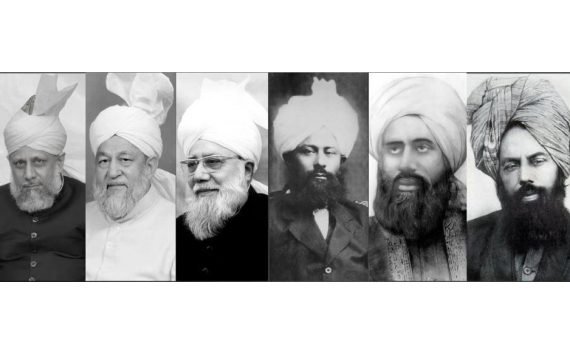
Hazrat Mirza Ghulam Ahmad, the Promised Messiah and Imam Mahdi as said, “Remember that Allah loves compassion and kindness and wants us to be kind to His subject and people. If He liked harshness and selfishness, He would have prescribed that but such a teaching is below His Grace. He is the Gracious, the Merciful. Therefore, you who have a bond with me, remember, that you should be gracious to everyone regardless of his religion, creed or race. Be kind to everyone as that is the teaching of the Holy Quran”
We should always be tolerant and kind, that is the real teaching of Islam.